As a teenager, I spent my time wondering why, in sci-fi movies, every landscape, every object I could see was Western or Asian-based. I’ve finally understood that somewhere our legacy had been locked in the past, that we couldn’t be ‚futuristic‘ in the eyes of our fellow Europeans.
We have to look behind our shoulders, get back to our traditions, seize the best of them and shape a future with it. This without forgetting we are part of the world, totally, unquestionably. The future is for me not only a matter of dialogue with the past, but, and beyond everything, a dialogue with the rest of the planet.
Kossi Aguessy
Wie kann die Geschichte des Designs in Afrika, einem Kontinent mit vierundfünfzig Ländern, adäquat erfasst werden – ohne dabei eine weitere essentialisierende Mastererzählung von ‚afrikanischem Design‘ zu produzieren? Und wie können die vielen miteinander verwobenen, oft aber asymmetrischen und ambivalenten Geschichten von Formfindungsprozessen zwischen Afrika und Europa sinnvoll zusammengeführt werden?
Den Prämissen eines globalen kunst- und designgeschichtlichen Ansatzes folgend schlägt das Buch einen Perspektivenwechsel vor: Der Fokus auf die Mobilität von Menschen, Objekten und Ideen – auf die flows zwischen Afrika und Europa sowie der Süd-Süd-Achse – ermöglicht es, vielfältige, jedoch notwendigerweise fragmentierte Designgeschichten zu identifizieren und anzuerkennen. In ihren Beiträgen spüren die Autor/innen vielschichtigen Design-Fallstudien nach, aus historischer Perspektive, mit Blick auf die Gegenwart ebenso wie auf potentielle Zukünfte.
Die Publikation bietet neue theoretische Perspektiven auf zeitgenössisches Design und Designpraktiken in Afrika (und darüber hinaus) und präsentiert die Arbeiten von mehr als 40 Kunst- und Designschaffenden.
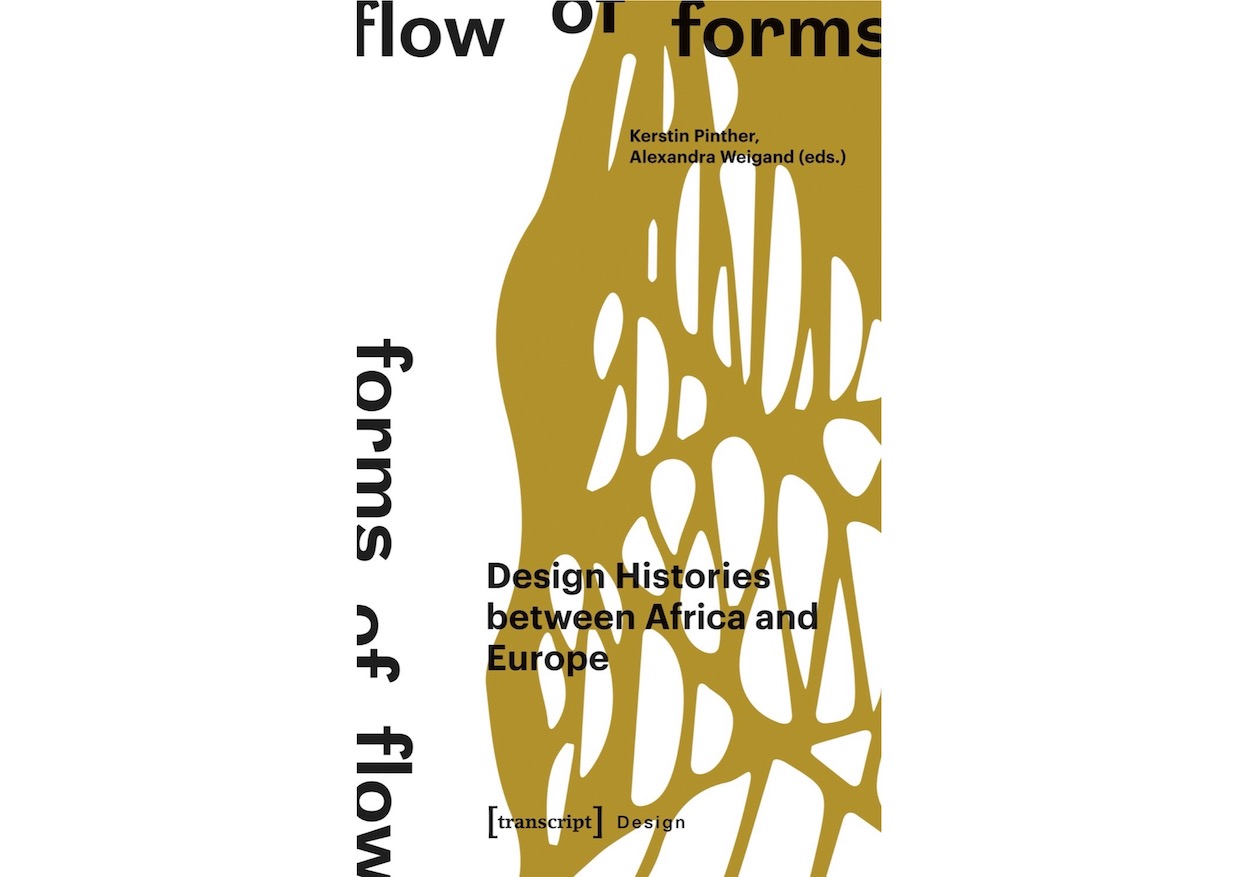
How is it possible to adequately capture histories of design in Africa, a continent with fifty-four countries? How can one avoid producing just another essentialising master narrative of ‚African Design‘? How can one make sense of the many entangled yet often asymmetric and sometimes ambivalent histories of form-finding processes between Africa and Europe?
In keeping with the premises of a global art and design history approach, the book offers a change of perspective: Focusing on the mobility of people, objects and ideas – on flows between Africa and Europe as well as on a South-South axis – allows for multiple yet necessarily fragmented design histories to be identified and recognised. The contributors trace multi-faceted design case studies from a historical perspective – with attention to the present as well as towards possible futures.
This publication offers new theoretical perspectives on contemporary design and design practices in Africa and beyond, highlighting the works of more than 40 designers and artists.
Herausgegeben von // Edited by:
Kerstin Pinther & Alexandra Weigand
Mit Beiträgen von // With contributions by:
Gui Bonsiepe, Alison J. Clarke, Erica de Greef, Christian Hanussek, Daniel Magaziner, Susan Mullin Vogel, Kerstin Pinther & Alexandra Weigand
Erschienen bei // Published by:
Bielefeld: transcipt, 2018.
https://www.transcript-verlag.de/978-3-8376-4201-8/flow-of-forms/forms-of-flow