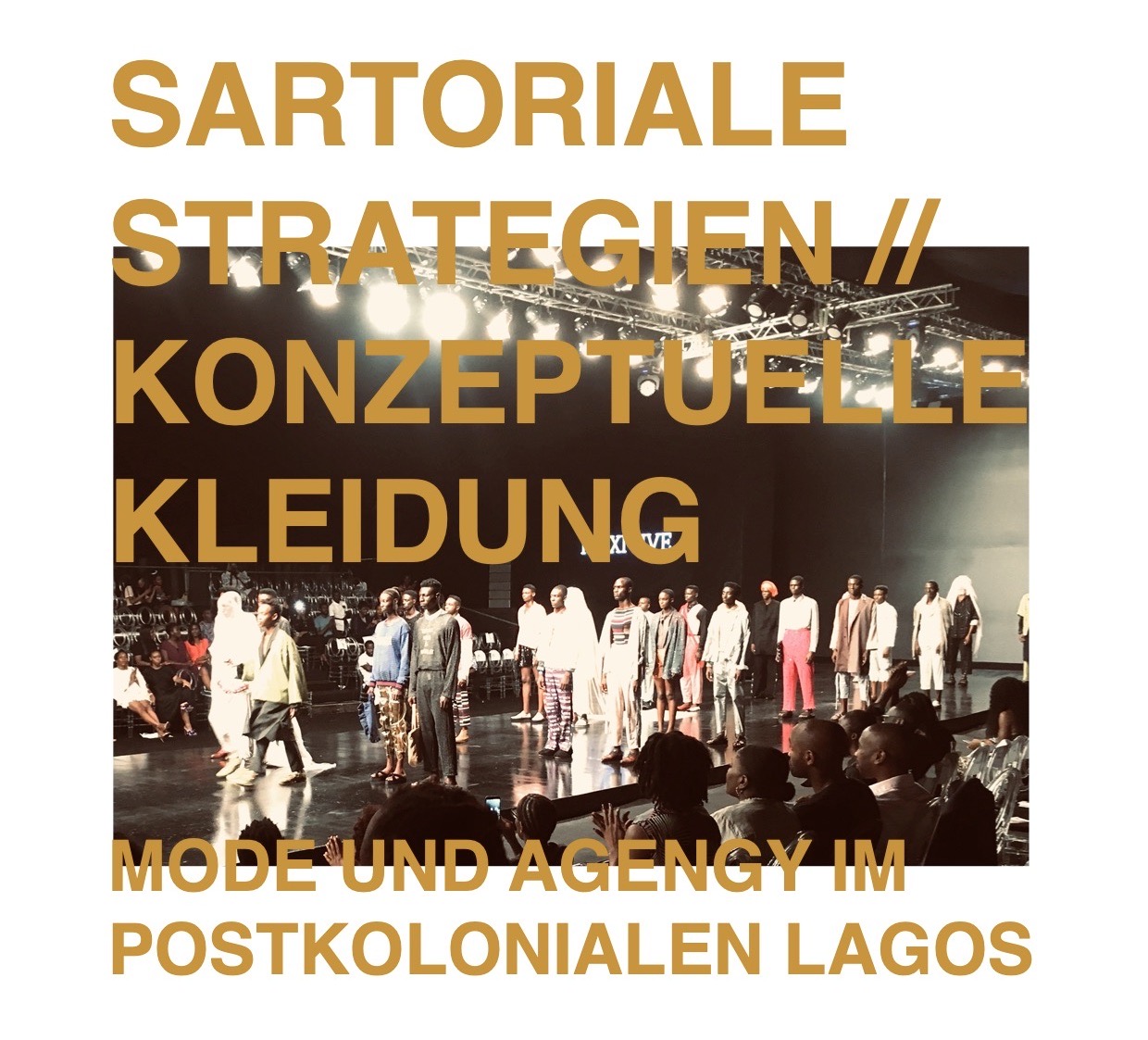
Welche Rolle spielt Mode in Zeiten gesellschaftlichen Wandels? Meine Dissertation untersucht die sartorialen Strategien, die im postkolonialen Lagos nach der Unabhängigkeit Nigerias sowie im konzeptuellen Modedesign der Gegenwart zum Einsatz kommen. Sie schließt an kunst- und designtheoretische Ansätze an, die eine Neuperspektivierung von Artefakten fordern und mit der Anerkennung verbunden sind, dass soziale, politische, ästhetische und habituelle Wissensformen in Objekten selbst und mittels gestalteter Objekte verhandelt werden können.
Mit einer Perspektive auf Mode als kulturelles Speichermedium, das kulturelles Wissen in Bezug auf (neue) gesellschaftliche Diskurse reaktiviert, umkodiert und neufiguriert, sowie einem Verständnis von Modedesign als Arbeit mit und an dem kulturellen Archiv wird das agentische Potenzial von Mode herausgearbeitet, gesellschaftlichen Wandel nicht nur widerzuspiegeln, sondern aktiv mitzugestalten.
Ausgewählte Biographien von Modeschaffenden wie der Pionierin Shade Thomas-Fahm, die als erste formal ausgebildete Modedesignerin des unabhängigen Nigerias gilt, und Positionen konzeptuellen Gegenwartsdesigns wie Lagos Space Programme, Iamisigo und Maxivive werden Mode als künstlerische Praxis ausweisen, die einen wirkmächtigen Beitrag bei der Formierung neuer gesellschaftlicher Visionen und postkolonialer Identitäten leistet.
What role does fashion play in times of socio-cultural change? My doctoral thesis examines the sartorial strategies applied in post-colonial Lagos following Nigeria’s independence, as well as in contemporary conceptual fashion design. It draws on approaches in art and design theory that call for a re-perspectivisation of artefacts and are linked to the recognition that social, political, aesthetic and habitual forms of knowledge can be negotiated within objects themselves and through designed objects.
By taking a perspective on fashion as a cultural storage medium that reactivates, recodes and reconfigures cultural knowledge in relation to (new) socio-cultural discourses, and by understanding fashion design as work with and on the cultural archive, the study explores fashion’s agency to not only reflect societal change but also to actively shape it.
Selected biographies of fashion creators such as the pioneer Shade Thomas-Fahm, who is regarded as the first formally trained fashion designer in independent Nigeria, and positions of contemporary conceptual design such as the Lagos Space Programme, Iamisigo and Maxivive, will identify fashion as an artistic practice that contributes profoundly to the formation of new societal visions and postcolonial identities.
Die Dissertation entstand im Rahmen des DFG-Forschungsprojekts “Fashion and Styles in African Cities” am Institut für Kunstgeschichte der LMU München unter der Leitung von Prof. Dr. Kerstin Pinther. Das internationale Forschungsprojekt, das Mode und Modetheorie interdisziplinär aus Kunstgeschichte, Anthropologie, Design Studies und Material Culture Research beleuchtete, hob die wichtige Rolle von Mode innerhalb der zeitgenössischen Kultur Afrikas hervor und ihre Bedeutung als Seismograph gesellschaftlicher Themen und Konditionen. Dabei galt es, das Phänomen Mode jenseits westlich dominierter Diskurse und gängiger Dichotomien zu erfassen und alternative Perspektiven zu entwickeln. //
The dissertation was written within the framework of the DFG (German Research Foundation) research project “Fashion and Styles in African Cities” at the Institute of Art History at LMU Munich, led by Prof. Dr Kerstin Pinther. The international research project, which examined fashion and fashion theory from an interdisciplinary perspective drawing on art history, anthropology, design studies and material culture research, emphasised the important role of fashion within contemporary African culture and its significance as a barometer of socio-cultural issues and conditions. The aim of the project was to grasp the phenomenon of fashion beyond Western-dominated discourses and common dichotomies and to develop alternative perspectives.
Online-Publikation // Online Publication (currently only available in German):
https://edoc.ub.uni-muenchen.de/36127/
Photos: © Alexandra Weigand